Lunes, Oktubre 22, 2007

BECAUSE WE ARE SO POOR

Juan Rulfo(1918)


Juan Rulfo (20 May 1917 – 7 January 1986) was a Mexican novelist, short story writer, and photographer. One of Latin America's most esteemed authors, Rulfo's reputation rests on two slim books, the novel Pedro Páramo (1955), and El llano en llamas (1953, The Burning Plain), a collection of short stories that includes his admired tale "¡Diles que no me maten!" ("Tell Them Not to Kill Me!"). He was named alongside Jorge Luis Borges as the best Spanish-language writer of the 20th century in a poll conducted by Editorial Alfaguara in 1999. He is the father of director Juan Carlos Rulfo.
I
Everything was going from bad to worse around here. Last week my Aunt Jacinta died, and on Saturday, after we’d buried her and weren’t feeling so quite so bad, it started to rain. That made my father angry, because the whole barley crop was drying in the sun, and the storm came up so fast we didn’t have a chance to get nay of it under cover. All we could was huddle under the lean to, watching the rain destroy the whole crop.
II
And just yesterday, when my sister Tacha was twelve years old, we found out that the river carried away the cow my father gave her for her birthday. The river started to rise three nights ago before dawn. I was sound asleep, but it made so much noise dragging at its bank that I woke up and jumped out of bed, with the covers on my head, as if I’d dreamed that the roof were caving in. Afterward, I went back to bed because I knew it was just the sound of the river, and pretty soon it put me to asleep again.
III
When I got, the sky was full of black clouds, and the noise of the river was even louder. It sounded close, and it had the rotten smell floodwater has, like the stink of a trash fire.
IV
By the time I went to take a look, the river was already up over its banks. It was rising little by little all along the street and running into the house of that woman they call The Drum. You could hear the splash of the water going into the corral and out the gate. The Drum was hurrying back and forth, throwing her chickens into the street so they could find someplace to hide, where the current wouldn’t reach them.
V
Over on the other side near the bend, the river must have carried off the tamarind tree at the edge of my aunt Jacinta’s corral, because you couldn’t see it any more. It was the only tamarind in the village, so everybody knows it is the biggest flood that’s come down the river in years....

Huwebes, Oktubre 11, 2007

Beowulf: The Legend


Beowulf begins with a history of the great Danish King Scyld (whose funeral is described in the Prologue). King Hrothgar, Scyld's great-grandson, is well loved by his people and successful in war. He builds a lavish hall, called Heorot, to house his vast army, and when the hall is finished, the Danish warriors gather under its roof to celebrate.
Grendel, a monster who lives at the bottom of a nearby mere, is provoked by the singing and celebrating of Hrothgar's followers. He appears at the hall late one night and kills thirty of the warriors in their sleep. For the next twelve years, the fear of Grendel's fury casts a shadow over the lives of the Danes. Hrothgar and his advisors can think of nothing to calm the monster's anger.
Beowulf, prince of the Geats, hears about Hrothgar's troubles, gathers fourteen of the bravest Geat warriors, and sets sail from his home in southern Sweden. The Geats are greeted by the members of Hrothgar's court, and Beowulf boasts to the king of his previous successes as a warrior, particularly his success in fighting sea monsters. Hrothgar welcomes the arrival of the Geats, hoping that Beowulf will live up to his reputation. During the banquet that follows Beowulf's arrival, Unferth, a Danish thane, voices doubt about Beowulf's past accomplishments, and Beowulf, in return, accuses Unferth of killing his brothers. Before the night ends, Hrothgar promises Beowulf great treasures if he meets with success against the monster.
Grendel appears on the night of the Geats' arrival at Heorot. Beowulf, true to his word, wrestles the monster barehanded.Click here to see the fight! He tears off the monster's arm at the shoulder, but Grendel escapes, only to die soon afterward at the bottom of his snake-infested mere. The Danish warriors, who have fled the hall in fear, return singing songs in praise of Beowulf's triumph. Hrothgar rewards Beowulf with a great store of treasures. After another banquet, the warriors of both the Geats and the Danes retire for the night.
Unknown to the warriors, however, Grendel's mother is plotting revenge (see "Grendel's Mother's Attack"). She arrives at the hall when all the warriors are sleeping and carries off Aeschere, Hrothgar's chief advisor along with her son's claw. (Click here to see the infamous claw!) Beowulf offers to dive to the bottom of the lake, find the monster and destroy her. He and his men follow the monster's tracks to the cliff overlooking the lake where Grendel's mother lives. They see Aeschere's bloody head sitting on the cliff. While preparing for battle, Beowulf asks Hrothgar to protect his warriors, and to send his treasures to his uncle, King Hygelac, if he doesn't return safely.
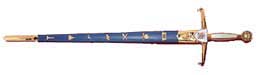
Before Beowulf goes into the sea, Unferth offers him his sword, Hrunting. During the ensuing battle Grendel's mother carries Beowulf to her underwater home. After a terrible fight, Beowulf kills the monster with a magical sword, probably put there by the Al-Weilder, that he finds on the wall of her home. He also finds Grendel's dead body, cuts off the head, and returns to land, where the Geat and Danish warriors are waiting expectantly. Beowulf has now abolished the race of evil monsters.
The warriors return to Hrothgar's court, where the Danes and Geats prepare a feast in celebration of the death of the monsters. Beowulf bids farewell to Hrothgar and tells the old king that if the Danes ever again need help he will gladly come to their assistance. Hrothgar presents Beowulf with more treasures, and they embrace, emotionally, like father and son.
The Geats sail home. After recounting the story of his battles with Grendel and Grendel's mother, Beowulf tells King Hygelac about the feud between Denmark and their enemies, the Heatho-bards. He describes the proposed peace settlement, in which Hrothgar will give his daughter Freawaru to Ingeld, king of the Heatho-bards, but predicts that the peace will not last long. Hygelac rewards Beowulf for his bravery with land, swords, and houses.
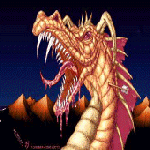
The meeting between Hygelac and Beowulf marks the end of the first part of the poem. In the next part, Hygelac is dead, and Beowulf has been king of the Geats for fifty years. A thief steals a jeweled cup from a sleeping dragon who avenges his loss by flying through the night burning down houses, including Beowulf's own hall and throne. Beowulf goes to the cave where the dragon lives, vowing to destroy it single-handedly. He's an old man now, and he is not as strong as he was when he fought Grendel. During the battle Beowulf breaks his sword against the dragon's side; the dragon, enraged, engulfs Beowulf in flames and wounds him in the neck. All of Beowulf's followers flee except Wiglaf, who rushes through the flames to assist the aging warrior. Wiglaf stabs the dragon with his sword, and Beowulf, in a final act of courage, cuts the dragon in half with his knife.
Yet the damage is done. Beowulf realizes that he's dying, that he has fought his last battle. He asks Wiglaf to bring him the dragon's storehouse of treasures; seeing the jewels and gold will make him feel that the effort has been worthwhile. He instructs Wiglaf to build a tomb to be known as "Beowulf's tower" on the edge of the sea. After Beowulf dies, Wiglaf admonishes the troops who deserted their leader when he was fighting against the dragon. He tells them that they have been untrue to the standards of bravery, courage, and loyalty that Beowulf has taught.
Wiglaf sends a messenger to a nearby camp of Geat soldiers with instructions to report the outcome of the battle. Wiglaf supervises the building of the funeral pyre. In keeping with Beowulf's instructions, the dragon's treasure is buried alongside Beowulf's ashes in the tomb. The poem ends as it began -- with the funeral of a great warrior.

Biyernes, Setyembre 21, 2007

I am a Filipino by Carlos P. Romulo


I am a Filipino — inheritor of a glorious past, hostage to the uncertain future. As such I must prove equal to a two-fold task — the task of meeting my responsibility to the past, and the task of performing my obligation to the future.


I sprung from a hardy race — child of many generations removed of ancient Malayan pioneers. Across the centuries, the memory comes rushing back to me: of brown-skinned men, putting out to sea in ships that were as frail as their hearts were stout. Over the sea I see them come, borne upon the billowing wave and the whistling wind, carried upon the mighty swell of hope — hope in the free abundance of new land that was to be their home and their children’s forever.This is the land they sought and found. Every inch of shore that their eyes first set upon, every hill and mountain that beckoned to them with a green and purple invitation, every mile of rolling plain that their view encompassed, every river and lake that promised a plentiful living and the fruitfulness of commerce, is a hollowed spot to me.
By the strength of their hearts and hands, by every right of law, human and divine, this land and all the appurtenances thereof — the black and fertile soil, the seas and lakes and rivers teeming with fish, the forests with their inexhaustible wealth in wild life and timber, the mountains with their bowels swollen with minerals — the whole of this rich and happy land has been, for centuries without number, the land of my fathers. This land I received in trust from them, and in trust will pass it to my children, and so on until the world no more.
I am a Filipino. In my blood runs the immortal seed of heroes — seed that flowered down the centuries in deeds of courage and defiance. In my veins yet pulses the same hot blood that sent Lapulapu to battle against the alien foe that drove Diego Silang and Dagohoy into rebellion against the foreign oppressor.
That seed is immortal. It is the self-same seed that flowered in the heart of Jose Rizal that morning in Bagumbayan when a volley of shots put an end to all that was mortal of him and made his spirit deathless forever; the same that flowered in the hearts of Bonifacio in Balintawak, of Gergorio del Pilar at Tirad Pass, of Antonio Luna at Calumpit; that bloomed in flowers of frustration in the sad heart of Emilio Aguinaldo at Palanan, and yet burst fourth royally again in the proud heart of Manuel L. Quezon when he stood at last on the threshold of ancient Malacañang Palace, in the symbolic act of possession and racial vindication.
The seed I bear within me is an immortal seed. It is the mark of my manhood, the symbol of dignity as a human being. Like the seeds that were once buried in the tomb of Tutankhamen many thousand years ago, it shall grow and flower and bear fruit again. It is the insigne of my race, and my generation is but a stage in the unending search of my people for freedom and happiness.
I am a Filipino, child of the marriage of the East and the West. The East, with its languor and mysticism, its passivity and endurance, was my mother; my sire was the West that came thundering across the seas with the Cross and Sword and the Machine. I am of the East, an eager participant in its spirit , and in its struggles for liberation from the imperialist yoke. But I know also that the East must awake from its centuried sleep, shake off the lethargy that has bound its limbs, and start moving where destiny awaits.
For I, too, am of the West, and the vigorous peoples of the West have destroyed forever the peace and quiet that once were ours. I can no longer live being apart from those whose world now trembles to the roar of bomb and cannon shot. I cannot say of a matter of universal life and death, of freedom and slavery for all mankind, that it concerns me not. For no man and no nation is an island, but a part of the main, there is no longer any East and West — only individuals and nations making those momentous which are the hinges upon which history resolves.
At the vanguard of progress in this part of the world I stand — a forlorn figure in the eyes of some, but not one defeated and lost. For through the thick, interlacing branches of habit and custom above me I have seen the light of the sun, and I know that it is good. I have seen the light of justice and equality and freedom, my heart has been lifted by the vision of democracy, and I shall not rest until my land and my people shall have been blessed by these, beyond the power of any man or nation to subvert or destroy.
I am a Filipino, and this is my inheritance. What pledge shall I give that I may prove worthy of my inheritance? I shall give the pledge that has come ringing down the corridors of the centuries, and it shall be compounded of the joyous cries of my Malayan forebears when they first saw the contours of this land loom before their eyes, of the battle cries that have resounded in every field of combat from Mactan to Tirad pass, of the voices of my people when they sing:


Land of the Morning,Child of the sun returning …


Ne’er shall invadersTrample thy sacred shore.


Out of the lush green of these seven thousand isles, out of the heartstrings of sixteen million people all vibrating to one song, I shall weave the mighty fabric of my pledge. Out of the songs of the farmers at sunrise when they go to labor in the fields; out of the sweat of the hard-bitten pioneers in Mal-ig and Koronadal; out of the silent endurance of stevedores at the piers and the ominous grumbling of peasants in Pampangga; out of the first cries of babies newly born and the lullabies that mothers sing; out of the crashing of gears and the whine of turbines in the factories; out of the crunch of ploughs upturning the earth; out of the limitless patience of teachers in the classrooms and doctors in the clinics; out of the tramp of soldiers marching, I shall make the pattern of my pledge:


“I am a Filipino born of freedom, and I shall not rest until freedom shall have been added unto my inheritance — for myself and my children’s children — forever.”

Now Don’t Just Sit There

In my schoolboy days I was stumped by a mathematical problem I could not solve, although I had wrestled with it for half an hour. It was a very mild autumn evening, and the neighboring was playing noisy games not far from my window. I chewed my pencil in bafflement.
Then, the reaction sits in. “I’ll do this if it takes all night,” I said aloud to myself. My first move was to go over and close the window, partly shutting out the sound of the laughing and shouting nearby. It was not yet Sandown but I pulled down the shade and turned on the light. Then I crumpled up the sheets of paper I had been working on assembled all the available facts of the problem on a clean sheet, gritted my teeth, and in five minutes had my solution.
No one can tell whether a door is locked or not until he tries the knob. It is reported that Houdini was followed one time by prison guard who challenged him to escape from a cell that apparently he had locked. The magician worked on the combination with knob. The door wasn’t locked.
In tackling problems that comes to us, the first principle is action, movement. Don’t just sit there. Perhaps the first thing to do is to stand up. Battles cannot be won from rocking chairs. The Chinese have proverb that a journey of a thousands miles is began with first step.
Sitting tight in rare instance may be praise worthy, but in the vast majority of situations, exercise of the ankle bones toward some chosen goal keeps as mentally and spiritually alert, and tends onto fortune, So don’t just sit there!

LAND OF BONDAGE, LAND OF THE FREE


Raul Manglapus


October 20, 1918 — July 25, 1999


Appointed as the Philippines’ youngest-ever foreign minister in 1957, and was elected to a national senate seat by a landslide in 1961. He ran for President in 1965, but lost to eventual dictator Ferdinand Marcos. Manglapus returned to the foreign affairs post in 1987 as a member of the cabinet of President Corazon Aquino. A statesman of towering stature, he is best summed up by a Philippine newspaper columnist as “…the best President we never had.”* * *

Once upon a time, the tao owned a piece of land. It was all he owned. But he cherished it, for it gave him three things, having which, he was content: life, first of all, and liberty, and happiness.
Then one day the Spaniard came and commanded him to pay tribute to the crown of Spain. The tao paid tribute. And he was silent — he was certain that he was still the master of his land.The Spaniard became rich. But with riches, evil entered into him and he came to the tao a second time. He read to the tao a formidable document saying: “According to this decreto real, which unfortunately you cannot read, this that you have been paying me is not tribute but rent, for the land is not yours but mine.” The tao paid tribute and said nothing … He ceased to be a freeman. He became a serf. Still the tao held his peace. The rent went up and up. The tao starved.
And this time at last he spoke. Not in words, but with that rustic instrument with which he cleared the land once his own — the bolo. He transformed it from an instrument of tillage to an instrument of death, and with it drove away the stranger. Then he returned to his field saying: “Now indeed shall I again be master of this land, once my own, but stolen from me by the trickery of quicker wits than mine.”
But the tao was wrong. For the land had another master. This time not a stranger, but his own countryman grown rich. The tao had a new name, kasama, which to us means partner, but which to the tao meant still a slave, for once more he suffered from his countrymen the same things he had suffered from the stranger: the rents, the usury, and all the rest of it.
Yes, the tao returned to his field thinking that he was free. But he soon discovered that he was still a prisoner. His prison, a two-room shack, rent by every wind, without any comforts, except tht three families have there the privilege to starve. The tao’s home has become his very prison. Its doors, if you can call them such, are wide open. It is a prison nonetheless. For the tao is bound to it, not with chains of steel, but with a stronger chain — his honor. To this day, the tao remains a slave, a prisoner of the usurer.
No wonder, then that tao, being a slave, has acquired the habits of a slave. No wonder that after three centuries in chains, without freedom, without hope, he should lose the erect and fearless posture of the freeman, and become the bent, misshapen, indolent, vicious, pitiful thing that he is! Who dares accuse him, who dares rise up in judgement against this man, reduced to this sub-human level by three centuries of oppression. The tao does not come here tonight to be judged — but to judge! Hear then his accusation and his sentence:
I indict the Spanish encomendero for inventing taxes impossible to bear.
I indict the usurer for saddling me with debts impossible to pay.
I indict the irresponsible radical leaders who undermine, with insidious eloquence, the confidence of my kind in our government.
You accuse me of not supporting my family. Free me from bondage, and I shall prove you false.
You accuse me of ignorance. But I am ignorant because my master finds it profitable to keep me ignorant. Free me from bondage, and I shall prove you false.
You accuse me of indolence. But I am indolent not because I have no will, but because I have no hope. Why should I labor, if all the fruits of my labor go to pay an unpayable debt. Free me from bondage, and I shall prove you false.
Give me land. Land to own. Land unbeholden to any tyrant. Land that will be free. Give me land for I am starving. Give me land that my children may not die. Sell it to me, sell it to me at a fair price, as one freeman sells to another and not as a usurer sells to a slave. I am poor, but I will pay it! I will work, work until I fall from weariness for my privilege, for my inalienable right to be free!
BUT IF YOU WILL NOT GRANT ME THIS … If you will not grant me this last request, this ultimate demand, then build a wall around your home … build it high! … build it strong! Place a sentry on every parapet! … for I who have been silent these three hundred years will come in the night when you are feasting, with my cry and my bolo at your door. And may God have mercy on your soul!

Lunes, Hulyo 16, 2007

Paalam sa Pagkabata ni Santiago Pepito salin ni Nazareno D. Bas

Paalam sa Pagkabata
("Panamilit sa Kabantanon ni Santiago Pepito") Paalam sa PagkabataSalin ni Nazareno D. Bas
(Part I)
Wala akong nakikitang pagbabago. Tulad nang nagdaang mga madaling-araw: ang ginaw, katahimikan, dilim – iyon din ang bumubuo ng daigdig ng aking kamalayan. Maraming bagay ang dapat mailarawan. Ngunit alam kong iisa lamang ang kahulugan ng mga iyon. Alam ko.
Sa kabilang silid, sa kwarto nina Nanay at Tatay, naririnig ko ang pigil ng paghikbi. Umiiyak na naman si Nanay. Ang sunod-sunod na paghikbi ay tila pandagdag sa kalungkutan ng daigdig. Napabuntung-hininga ako. Umiiling-iling. Hanggang ngayon hindi ko pa nakikita ang tunay na dahilan ng damdaming iyon na matagal nang umalipin sa kanya.
Walang malinaw sa aking isipan. Mula sa aking pagkamulat ang pagkainip ay kakambal ng aking buhay. Sa aking pag-iisa di ko maiwasan ang pangarap na magkaroon ng batang kapatid na nag-aangkin ng mabangong hininga at taglay ang ngiti ng isang anghel. Ngunit ang damdamin ko’y tila tigang na lupang pinagkaitan ng ulan.
Maliwanag na ang silangan nang ako’y bumangon. May bago na namang umaga. Ngunit ang tanawin sa bahay ay walang pagbabago. Tulad ng dati, nakikita ko si Nanay na nakaupo at nag-iisip sa may hagdanan. Nakatitig siya sa sampayan ng lambat ni Tatay. At madalas ang kanyang pagbubuntong-hininga.
Matagal ko nang nakikita ang sampay na lambat. Ngunit hindi ko nakikitang ito’y ginagamit ni Tatay. Noon ay walang halaga ito sa akin. Nagsimula ang pagpansin ko sa lambat noong ito’y tinapon ni Nanay mga dalawang taon na ang nakakaraan. Galit na galit si Tatay sa ginawa ni Nanay. Pinagbuhatan ni Tatay ng kamay si Nanay. Pagkatapos ipinabalik kay Nanay ang lambat sa sampayan.
"Hanggang ngayon ba’y hindi ka pa nakakalimot, Tomas? Alam ng Diyos na wala akong kasalanan. Ang kanyang ginawa ang siya mong ginagawa tuwing ikaw ay darating sa madaling-araw. Ang kanyang amoy ay siya ring amoy na galing sa dagat. Magkatulad ang inyong ikinikilos. Sino ang hindi mag-aakala na siya ay hindi ikaw? Huli na nang malaman ko ang katotohanan. Huli na nang siya ay aking makilala. Totoong lumigaw siya sa akin. At mula noon ay alam mo iyon. Ikaw ang aking iniibig, Tomas. Kailan mo pa malilimutan ang nangyari?"
[Pangkat II]
Tuluyang umiyak si Nanay. Umungol lamang si Tatay. Nanlilisik ang matang tumingin sa lambat at pagkatapos ay bumaling sa akin. May ibig sabihin ang tingin niyang nag-aapoy. Maliban sa takot na aking nararamdaman ay wala akong naintindihan sa pangyayaring iyon.
Mula noon ay hindi na ginalaw ni Nanay ang lambat. Naluma na ito ngunit buong-buo pa rin sa aking paningin. Buong-buo pa rin sa paningin ni Nanay. Ano kaya ang misteryong napapaloob sa lambat na iyon? Alam kong alam ni Nanay ang hindi ko nalalaman. At kailangang malaman ko ito. May karapatan akong malaman.
Nilapitan ko si Nanay na malalim pa rin ang iniisip. Hinalikan ko ang kanyang kamay. May ibig akong itanong tungkol sa misteryo ng lambat. Ngunit nauntol ang ibig kong sabihin nang magpatuloy ang kanyang pagluha.
"Lakad na Celso, malapit nang dumating ang Tatay mo."
Sa labasan, sumalubong sa akin ang bagong araw. Tumingin ako. Maliwanag ang langit. Langit? May gumugulo sa aking kalooban. Kalawakan. Iyan ang sabi sa aking guro sa ikaapat na baitang ng primarya. Iyan ay hindi langit kundi hangganan lamang ng pananaw ng tao. Ang langit ay nasa tao. Hindi nakikita. Hindi nahihipo. Hindi naaabot. Naabot na kaya ni Nanay ang langit?
"Ano pa ang hinihintay mo, Celso?"
Ipinahid ko sa mukha ang suot kong sando. Humakbang pagkatapos. Maya-maya’y tumakbo na ako ng matulin.
Nasa dalampasigan ang mamamili ng isang dala ng mga bangkang galing sa laot. Masasaya silang nagkukuwentuhan habang hinihintay ang mga mangingisda. Sumalampak ako sa buhangin, malapit sa kinauupuan ng dalawang lalaking may katandaan na. Sa laot ako nakatingin at pinagmamasdan ang galaw ng mga alon na pandagdag sa kagandahan ng kalikasan.
Napalingon ako nang makarinig ng tugtog ng gutara mula sa di-kalayuang bahay-pawid. At sabay kong narinig ang malungkot na awiting nagsasaad ng kasawian sa pag-ibig. At mula na namang naantig ang aking damdamin. Habang pinakikinggan ko ang malungkot na kundiman umalingawngaw ang mahinang pag-uusap ng dalawang lalaki sa tabi[o] ko.
"Naririyan na naman siya."
"Talagang pambihira ang kanyang pagmamahal. Naniniwala akong nagpapatuloy ang kanyang pangarap habang di pa namamatay ang babae sa kanyang buhay. Hindi nawawala ang kanyang pag-asa. Kung kailan natutupad ang kanyang pangarap Diyos lamang ang nakakaalam."
[Pangkat III]
Dinig na dinig ko ang mga kataga habang nagpapatuloy ang malungkot na kundimang naging bahagi na ng aking buhay. Tumayo ako at ibinaling ang paningin sa bahay-pawid sa ilalim ng kaniyugan. Patuloy ang awitin. Humakbang ako ngunit biglang napatigil sa harap ng dalawang lalaking may katandaan na. Naalala ko ang sabi ni Tatay. Bawal pumunta sa bahay-pawid na iyon. Mahigpit ang utos ni Tatay. Nagbabanta ng parusa.
Lumingon ako sa laot. Nasa malayo ang mga bangka ng mga mangingisda. Bumaling ako sa pinanggalingan ng awit na ngayo’y gumaganda sa aking pandinig. At para akong hinihila. Nakalimutan ko ang ipinagbabawal ni Tatay. Mabilis ang aking paglakad at sa ilang saglit kaharap ko na ang taong naggigitara at umaawit. May luha ang kanyang mga mata.
Tumitig siya sa akin. Inilapag ang gitara sa ibabaw ng papag na kinauupuan. Tumayo siya at dahan-dahang lumapit sa akin. Kinabahan ako. Umakma akong tumakbo ngunit nahawakan niya ang isa kong kamay. Nagpumiglas ako upang makawal sa kanyang pagyapos sa akin. Ngunit lalong humigpit ang kanyang pagyakap. Umiiyak ako.
Ngumiti siya at pinahid ang aking mga luha. Hinimas ang aking ulo. Unti-unting lumuwag ang aking paghinga. Nararamdaman ko ang kanyang pagmamahal nang tumingin ako sa kanya. Muli niya akong niyapos.
"Dalawin mo ako palagi, ha?"
Hindi ako kumibo. Tinitigan ko siya. Ang kanyang mga mata, ang ilong, ang labi – lahat parang nakita ko na. Saan? Alam ko na, sa salamin. Talagang siya ang nakita ko sa salamin na nakasabit sa dingding ng aming bahay.
Napatingin ako sa dalampasigan nang marinig ko ang hiyawan. Nagdatingan na pala ang mga bangka at nag-uunahan ang mga mamimili ng isda. Nagmadali akong tumakbo upang salubungin ang Tatay. Malayo pa ako ng makita ko siyang nakatayo sa may dinaungan ng kanyang bangka. Natanawan niya ako. Masama ang titig niya sa akin. Galit. Kinabahan ako.
"Lapit rito, Celso!"
Malakas ang sigaw ni Tatay. Nanginginig akong lumapit. At bigla akong sinampal.
"Di ko gusto ang batang matigas ang ulo! Di lang sampal ang matitikman mo kapag umulit ka pa. Hala, kunin mo ang mga isda at sumunod ka kaagad sa akin."
Habang naglalakad ay sinalat ko ang pisnging nakatikim ng sampal. Talagang mahirap intindihin si Tatay. Wala namang dahilan upang iwasan ko ang taong nasa bahay-pawid. Di naman dapat katakutan ang kanyang mukha at boses. Bakit kaya hinihigpitan ako ni Tatay?
[Pangkat IV]
Matapos akong mag-almusal, nandoon na naman si Tatay sa sampayan ng lambat. Nakatabako at nagtatagpi ng punit na bahagi ng lambat. Alam kong aabutin siya ng tanghali bago matapos ang kanyang gawain. Matapos makapananghalian siya’y matutulog. Pagkagising maghahapunan. At di pa man ganap ang gabi balik na naman sa dagat. Iyan ang buhay ni Tatay. At iyan ang bahagi ng aking buhay.
Sa aking kinauupuan sa may bintana nakikita ko sa Nanay na nakaupo sa may hagdanan. Tahimik at nakatingin na naman sa sampayan ng lambat. Luhaan na naman ang kanyang mga mata. At naalala ko ang pangyayari noong itinapon ni Nanay. Lahat may itinatagong kahulugan. At naalala ko ang nangyari kanina sa dalampasigan. Naalala ko iyong tao.
Lumapit ako sa salamin sa dingding. Pinagmasdan ko ang aking sarili. Nakita ko sa aking isipan ang mukha ng tao. Unti-unting lumiwanag ang aking kamalayan. Biglang kumulo ang aking dugo habang iniisip ang nakasampay na lambat. Nagdilim ang aking paningin. Nadama kong inihahanap ko ang katarungan ang aking kalagayan.
Nagpunta ako sa kusinaan. Hinanap ko ang itak ni Nanay na pangsibak ng kahoy. Bitbit ko ito at pinuntahan ang sampayan ng lambat. Pinagtataga ko ang lambat.
"Huwag, Celso!" saway ni Nanay na nanginginig ang boses. "Huwag!"
Naiiba sa aking pandinig ang pagsigaw ni Nanay. Pati si Tatay ay natigilan at nabigla sa aking ginawa ay hindi ko pinansin. Hinalibas ko ng itak ang lambat at saka lang ako tumigil nang ito’y magkagutay-gutay na at nagkalat sa aking paanan.
"Celso!"
Nag-aapoy ang mga mata ni Tatay na humarap sa akin. At sa unang pagkakataon ay hindi ko inalis ang aking tingin sa kanya. Nilabanan ko siya ng titigan. Di ako nagagalit kundi humihingi lamang ng pang-unawa. Ngunit bigla akong napatimbuwang nang matamaan ng malakas na suntok at napahiga sa pira-pirasong wasak na lambat.
Nahihilo ako, parang ibig himatayin. Umiikot ang aking paningin. Parang may nakita akong anino – si Tatay na sumusurot kay Nanay.
"Ngunit, Tomas," nagmamakaawa si Nanay. "Wala siyang kasalanan. Maawa ka sa kaniya."
"Pumanhik ka, Isidra!" singhal ni Tatay. "Pumanhik ka na habang ako’y nakapagpipigil pa."
[Pangkat V]
Dahan-dahan akong bumangon at sumuray-suray na lumapit kay Tatay. Ngunit isang tadyak ang sumalubong sa akin. Napatihaya ako ngunit tinangka kong makatayo. Mabigat ang pakiramdam ko sa aking katawan at ako’y gumagapang. Ngunit sinabunutan ako ni Tatay at iningudngod sa lupa ang aking mukha. Humihingal ako ngunit di ko makuhang umiyak. Nasasalat ko ang magkahalong dugo at pawis sa aking pisngi.
Di ko pansin ang mga gasgas sa dalawang siko. Sa labis na panghihina’y umusad ako nang umusad. Hanggang sa nangangatog kong mga bisig ay yumapos sa mga binti ni Tatay. Naramdaman ko ang panlalamig ng katawan at ako ay napahandusay sa kanyang paanan.
Hindi ko na alam kung gaano katagal ang pagkawala ng aking malay. Naramdaman ko na lamang may maiinit na mga bisig na yumayakap sa akin. Kinusot ko ang aking mga mata. Sumalubong sa aking paningin ang maamong mukha ni Tatay. Pagsisisi. Pag-unawa. Lahat ay kasalungat sa dati niyang gawa. Lalong humigpit ang kanyang pagyakap at kinabig ang aking mukha sa kanyang dibdib sa tapat ng kanyang puso. Matagal.